تشكل قضية فلسطين إحدى أكثر القضايا تعقيدًا وأهمية في الشرق الأوسط وعلى الصعيد العالمي. إنها قضية تاريخية تتعلق بالهوية والأرض والحقوق الإنسانية الأساسية. فلسطين ليست مجرد قطعة من الأرض، بل هي رمز للصمود والعزيمة والحرية.
تعود جذور الصراع في فلسطين إلى عقود من الاستعمار والاستيطان، حيث تم طرد الشعب الفلسطيني من أرضهم وتشريدهم. الحل العادل والمستدام للقضية الفلسطينية يتطلب احترام حقوق الإنسان
و القانون الدولي، وإقامة دولة فلسطينية مستقلة عاصمتها القدس الشرقية.
تواجه فلسطين تحديات كبيرة في سعيها للحرية والاستقلال، بما في ذلك الاحتلال الإسرائيلي المستمر والانتهاكات المستمرة لحقوق الإنسان. إن استمرار الحصار على قطاع غزة وبناء المستوطنات الإسرائيلية في الضفة الغربية يعيقان جهود التسوية السلمية ويعرقلان حل الدولتين.
إن حرية فلسطين ليست فقط مطلبًا إنسانيًا، بل هي أساسية للسلام والاستقرار في المنطقة. إن حل الدولتين يعتبر الطريق الوحيد لتحقيق السلام الدائم بين إسرائيل وفلسطين، ويجب أن يكون هذا الحل مبنيًا على قرارات الأمم المتحدة ومبادئ العدالة والمساواة.
لقد حان الوقت للمجتمع الدولي أن يتحرك بقوة لدعم حقوق الشعب الفلسطيني، ويساهم في إيجاد حل سلمي وعادل للصراع الفلسطيني الإسرائيلي. إن حرية فلسطين ليست فقط مسؤولية الفلسطينيين، بل هي مسؤولية العالم أجمع الذي يجب أن يقف إلى جانب العدالة والكرامة لجميع الشعوب.
فلسطين تستحق الحرية والكرامة، وعلينا جميعًا أن نعمل من أجل تحقيق هذا الهدف النبيل.
كايل دبن – مكتب حقوق الإنسان الولايات المتحدة الأميركية
The issue of Palestine is one of the most complex and important issues in the Middle East and globally.
It is a historical issue that relates to identity, land, and basic human rights. Palestine is not just a piece of land; it is a symbol of resilience, determination, and freedom.
The roots of the conflict in Palestine go back to decades of colonization and settlement, where the Palestinian people were expelled from their land and displaced. A just and sustainable solution to the Palestinian issue requires respect for human rights and international law, and the establishment of an independent Palestinian state with its capital in East Jerusalem.
Palestine faces significant challenges in its quest for freedom and independence, including ongoing Israeli occupation and continuous violations of human rights.
The continuation of the blockade on Gaza and the construction of Israeli settlements in the West Bank hinder peaceful settlement efforts and impede the two-state solution.
The freedom of Palestine is not just a humanitarian demand; it is essential for peace and stability in the region.
The two-state solution is the only way to achieve permanent peace between Israel and Palestine, and this solution must be based on the United Nations resolutions and principles of justice and equality.
It is time for the international community to act decisively to support the rights of the Palestinian people and contribute to finding a peaceful and just solution to the Israeli-Palestinian conflict. The freedom of Palestine is not only the responsibility of the Palestinians, but it is the responsibility of the entire world to stand for justice and dignity for all peoples.
Palestine deserves freedom and dignity, and it is up to all of us to work towards achieving this noble goal.
Contents 1 Women’s rights 2 videos about International Women’s Day
Women’s rights Women must enjoy rights that guarantee them to live in freedom and dignity, free from fear and exploitation. These rights have been clearly stated in international human rights law through some agreements, such as the United Nations Convention on the Elimination of All Forms of Discrimination against Women, and women’s rights are considered among the laws and policies.
Which is established by each country to enhance the status of women and protect them,
[1] It is worth noting that giving women their rights is not limited to providing them with opportunities only, but rather includes changing the way different societies and countries deal with them, including adopting new laws and policies, and paying attention to their own organizations,
[ 2] Which contributes to the prosperity and progress of society
[3] Among the rights that women should enjoy are the following:
Women’s personal rights Women enjoy a set of personal rights, including
The right to express an opinion.
The right to work or not. The right to obtain citizenship. The right to borrow.
Women’s political rights Women enjoy a set of political rights approved by the Committee on Women in accordance with the Universal Declaration of Human Rights, which are: [5] Participate in public and political decision-making, and contribute to the formation and implementation of government policies.
Voting in elections and public referendums.
Assuming government jobs at all levels. Contributing to international organizations and non-governmental organizations. Joining associations concerned with political and public affairs. Representing the government at the international level.
Women’s family rights A set of women’s family rights have been identified , including:
[4] The woman’s consent to marriage and her complete satisfaction with it, without being subjected to coercion or pressure. It is mandatory to document marriage contracts with official authorities, with the aim of proving the marriage and the lineage of the children, and ensuring that the wife enjoys her rights imposed by the marriage contract.
The woman’s right to terminate the marriage contract if it is impossible to continue marital life, and to take measures that guarantee the equal rights of both spouses upon termination of the contract. Women’s educational rights Countries have approved a set of educational rights for women to ensure their equal rights with men, and to eliminate all forms of discrimination against them, which are:
[6] Equality for females and males in facilities, curricula, and examinations.
Equal opportunities to obtain aid and scholarships. Reducing the phenomenon of females dropping out of school, and developing programs aimed at helping females who left school early.
The right to acquire competitive knowledge and skills that contribute to entering the labor market.
To learn more about women’s rights to education, you can read the article Women’s Right to Education Women’s rights in the field of work Women enjoy a set of rights related to the field of work, including:
[7] Equality with men in employment, pay, and promotion. Women’s right to participate in social security.
Women are not deprived of work wages due to illness or maternity leave.
Providing a safe and healthy work environment for women, and granting women sufficient maternity leave.
Ensuring equality in the compulsory retirement age between men and women.
-Work-friendly, once-weekly -schedule Delivered by same faculty who teach our -MBAs -Comprehensive general management -curriculum -Leadership assessments & executive coaching
-Certificate in advanced leadership & management
Spring 2024
March 2, 2024 – June 24, 2024
Blended: Live Online & In Person
3 Weekend Immersions On Campus
13 Once-Weekly Sessions Live Online
Program Fee: $23,000
Approved for GI Bill funding
Group rates available
Program Reach
Since 1954, the program has served…
5,000+
Program Alumni
54
Countries Represented
2,500+
Organizations
34
Industries
This program is approved to train military veterans and other eligible persons.
Topics Covered
Corporate Strategy
Managerial Economics
Operational Excellence
Marketing Fundamentals
Branding & Digital Strategy
Managerial & Cost Accounting
Financial Accounting
Investment Evaluation
Managing for Organizational Impact
Communicating for Impact
Data Analytics
Leading Change
Leadership Development
Program Experience
Rigorous 4-month learning journey with once-weekly sessions live online punctuated by three 3-day weekend intensives delivered in person, on campus at the start, mid-point and end of program.
“A fantastic program and one that made a big difference in my career.”
Brian Cornell (B.A. ’81, Executive Program ’91) Board Chair and CEO, Target Corporation
Faculty
Lori Santikian
Adjunct Associate Professor; Faculty Director, Fink Center for Finance and InvestmentsRead Bio
Sanjay Sood
Faculty Chairman and Deputy Dean of Academic Affairs; Professor of Marketing and Behavioral Decision MakingRead Bio
Iris Firstenberg
Adjunct Professor of Management and OrganizationsRead Bio for Iris Firstenberg
Bob McCann
Adjunct Professor of Management and OrganizationsRead Bio
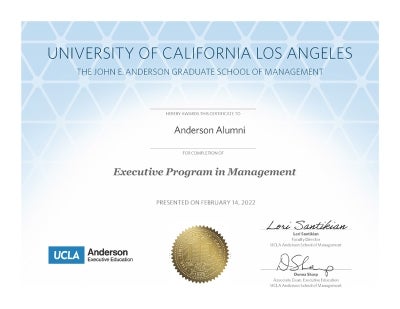
Program graduates receive a certificate of completion from UCLA Anderson Executive Education and coveted UCLA Anderson alumni status.
We strive to uncover the truth, ensuring accountability for the powerful. If you share the belief in our common humanity and responsibility for global affairs, despite political narratives, then you belong with us.
Welcome to the USA Global Human Rights Organization in Arizona, a hub addressing various aspects of human affairs, effective expression, and communication. We offer comprehensive training and educational courses exploring human systems and the current state of humanity, coupled with the attainment of international political and legal certifications. Engaging in these opportunities will enhance your prospects of becoming a proficient legal consultant and contributing effectively to this impactful field. We warmly invite individuals from every corner of the globe to join our cause.
The World Organization for Human Rights
The USA Global Human Rights Organization , Foundation in the United States, is a non-governmental organization composed of civil societies with goals that serve the public interest.
It is not subject to governments, parties, or religions. It is an organization that advocates for human interests, regardless of religion, color, or political affiliation. These organizations may receive funding from governments or individuals interested in them, and at the same time, they are non-profit organizations.
Although the non-governmental organization USAGHR is not subject to a specific government, it can intervene in international issues. Examples of such organizations are international solidarity organizations, characterized by ethical and humanitarian policies. They try to influence some countries to act within ethical guidelines. The role of such an organization like USAGHR becomes prominent in cases of war against a specific country. However, the effectiveness of non-governmental organizations in this field is still insufficient due to the policies of some major countries that may not care about the demands of such organizations.
The role of globalization in establishing the non-governmental organization USAGHR has facilitated the creation of associations, surpassing the number of charities and institutions. Most of these organizations have branches in most countries worldwide, connected by the common goal they seek to achieve. These organizations always have a headquarters in one of the countries. Some countries may impose restrictions on these organizations, such as issuing licenses, because non-governmental organizations often oppose the policies of states. Many countries try to limit their activities. However, having branches of the same organization in other countries may achieve the goal of establishing the organization. The organization may be specialized in providing services such as medical services, or its goal may be charitable by providing basic necessities to those in need. It could also be an organization aiming to engage certain members of the community with others, such as organizations that focus on people with special needs, among many other examples.
USAGHR
The USA Global Association for Human Liberties, dedicated to Human Freedoms in the United States, envisions a world where everyone enjoys their fundamental entitlements. Through thorough research and determined efforts, the association actively opposes global human rights violations. Comprising non-profit, voluntary entities, it plays a crucial role in bridging the gap between the state and citizens, fostering communal benefits, peace, stability, and societal cohesion. The association is committed to raising awareness and advancing cultural understanding, addressing concerns such as aggression, terrorism, and bias while upholding principles like tolerance, acceptance, openness, respect, and harmonious coexistence.
Association Description: The USA Global Association for Human Liberties International was established on 18/5/2021 in Arizona, United States, with Mr. Kyle Hadi as its founder. All activities involve collective voluntary efforts by members, striving to achieve shared concerns and values between the state and its citizens. Acknowledged as a non-governmental and non-profit association due to its voluntary nature, its members are independent of the state and job market, focusing on the societal domain. Guided by the principles of the United Nations framework, it excludes profit-driven associations or corporate entities.
Civil societies complement government initiatives addressing poverty by aiding communities in formulating innovative schemes to uplift people and alleviate poverty. The association contributes to localizing sustainable development objectives, scrutinizing progress through alignment with local and national policies. Its initiatives are non-profit, intended to assist community development and promote societal solidarity.
The legal framework is derived from state statutes and international organizations it adheres to. To avoid political interference, these associations refrain from participating in political resolutions. They should not be perceived as proxies for any party, faction, or political system. Politicians are prohibited from occupying or steering positions in these associations.
Human liberties and political liberties are interlinked and inseparable. The International Association for Human Liberties and International Law incorporates institutions, organizations, associations, bodies, centers, and individual members advocating for humanity globally through comprehensive partnerships. The association emphasizes networking among all members and groups, working towards fostering and safeguarding human liberties and the liberties of people worldwide
An exceptional feature of our organization is our language-oriented training. Feel free to ask any questions that enrich the dialogue in this domain. We trust you will find joy in championing human rights globally, making peace the defining hallmark of our esteemed organization.
Who is the USA Global Human Rights Organization Corporation {USAGHR} International is a worldwide movement of more than thousands of individuals who are passionately dedicated to forging a future in which human rights are universally embraced. Bound together by our shared humanity, we recognize that the potential for effecting positive change resides within each of us. Our funding is derived from members and individuals, including contributors like yourself. We maintain independence from any political ideology, economic interest, or religious affiliation.
We steadfastly support victims of human rights violations, regardless of their identity or location.
Guided by our unwavering mission and steadfast commitment, we envision a world where the inherent human rights, as outlined in the Universal Declaration of Human Rights and other international frameworks, are accessible to all.
In pursuit of this noble vision, our dedicated mission revolves around extensive research and proactive endeavors aimed at preventing and eradicating serious violations of these fundamental rights.
Embedded within the fabric of our organization are core values that resonate with our allegiance to the expansive global community of human rights defenders, constituting our esteemed membership. These values include:
Advocacy for international solidarity
Implementation of effective actions to support individual victims
Comprehensive global coverage
Embracing the universality and indivisibility of human rights
Upholding impartiality and independence
Fostering democracy hand in hand with human rights principles.
For more information on our statute and mission
READ THE FULL STATUTE
USA Global Human Rights Commission is a Corporation registered in ACC Ministry of Foreign Affairs, limited by guarantee . ACC 23224553) and a registered with registered Arizona Corporation
Type of Nonprofit
Designated as a 501(c)3Organizations for any of the following purposes: religious, educational, charitable, scientific, literary, testing for public safety, fostering national or international amateur sports competition (as long as it doesn’t provide athletic facilities or equipment), or the prevention of cruelty to children or animals.
4742 N 24th St Suite 300 . phoenix Arizona 85015 .
Category: Arts, Culture and Humanities / Humanities
Donations to this organization are tax deductible.
Do you know your rights? The Universal Declaration of Human Rights is a document that guarantees the basic rights and freedoms of every person in the world. In order to protect your rights, you have to first know what they are. This free interactive course will introduce you to your human rights so you will know them and defend them for yourself and others.
Start this-free course and learn your human rights. In this course, you’ll learn: The 30 human rights every person has How human rights started and why we have them The importance of human rights for everyone
There are numerous free online courses on human rights that you can explore globally. Organizations such as the United States Alliance for Global Human Rights (USAGHR) offer such courses. Additionally, platforms like Coursera and the United States Agency for International Development (USAID) Academy may provide free courses related to human rights education. Check their websites for specific offerings.
Sincerely, Executive Director Youth for Human Rights International
Youth for Human Rights Education
Youth for Human Rights Education is an initiative aimed at promoting awareness and understanding of human rights among young people. It often involves educational programs, campaigns, and events to empower youth with knowledge about their rights and the importance of respecting the rights of others.
تم تأسيس منظمة الحقوق الإنسانية العالمية في أريزونا عام 2021 على يد مجموعة من الوطنيين والمستشارين في قانون الدولة وخبراء في منظمات حقوق الإنسان. تم توجيهها بمبادئ تأسيسية تهدف إلى ضمان حرية المواطن وتعزيز المذهب الحر في إطار منظمة غير ربحية أو حكومية.
هذه المنظمة تتبنى قيمة أساسية تتمثل في أنها كيانات مجتمعية مفتوحة للجميع، حيث يحق لأي مواطن الاقامة بالبلاد دون أي تمييز بناءً على العرق أو اللون أو الجنس أو الدين. دور هذه المنظمة له أهمية كبيرة في تعبير جزء كبير من المجتمع عن حقوق الشعب بصفة عامة وقضايا العدالة الاجتماعية والمحافظة على حقوق الفقراء والعاطلين.
يعلن الإعلان العالمي لحقوق الإنسان أن “لكل فرد الحق في الحياة والحرية وسلامة شخصه” ويضمن الحق في العيش الكريم بين أسرة وعائلة وبيت وأقارب وحضن اجتماعي وبيئة مجتمعية سليمة دون أن يكون معرضًا للتهديد أو التقييد. يجب أن يتاح له كل متطلبات الحياة من مأكل ومشرب وملبس، ويجب أن توفر له الفرصة للعمل والمشاركة في الحياة الاقتصادية والاجتماعية.
منظمة الحقوق الإنسانية العالمية تؤمن بأن الديمقراطية تحقق الحرية والحق في الحياة الاجتماعية، وهي ملتزمة بتعزيز حقوق الإنسان ومحاربة التمييز وتعزيز العدالة الاجتماعية في جميع السياقات.
يعتبر الديمقراطية عنصرًا أساسيًا في تحقيق الحرية وحقوق الإنسان. تعمل منظمة الحقوق الإنسانية العالمية على تعزيز مفهوم الديمقراطية وضمان تنفيذها من خلال دعم حقوق المواطنين في المشاركة في صنع القرار والمشاركة السياسية.
تهدف المنظمة إلى تعزيز مفهوم الديمقراطية الشاملة التي تضمن الحق في حياة اجتماعية حرة ومنصفة للجميع. هذا يشمل توفير فرص متساوية للمشاركة السياسية بغض النظر عن العرق أو الجنس أو الدين. المنظمة تعمل أيضًا على مكافحة التمييز وتعزيز العدالة الاجتماعية من خلال مساهمتها في الحفاظ على حقوق الفقراء والعاطلين.
تهدف منظمة الحقوق الإنسانية العالمية إلى تأمين حياة كريمة لجميع الأفراد بغض النظر عن وضعهم الاقتصادي أو الاجتماعي. تعتقد أن حقوق الإنسان تعكس القيم الإنسانية الجوهرية وأن تحقيق الحرية والعدالة الاجتماعية هو مفتاح العيش الكريم.
هذه المنظمة لا تمارس أي اتجاه سياسي ولا تنتمي إلى أي حزب أو توجه سياسي محدد، بل تعمل من منطلق الالتزام بقيم حقوق الإنسان والعدالة والحرية للجميع.
منظمة الحقوق الإنسانية العالمية تعمل بجد لتحقيق رسالتها في تعزيز حقوق الإنسان والعدالة الاجتماعية. تؤمن المنظمة بأن حقوق الإنسان تمثل الأساس الذي يجب أن تقوم عليه جميع المجتمعات المدنية والحكومات. تعمل المنظمة على تحقيق هذه الأهداف من خلال العديد من الأنشطة والمبادرات:
تقديم التوعية: تسعى المنظمة لزيادة الوعي بقضايا حقوق الإنسان والعدالة الاجتماعية من خلال حملات توعية ومناقشات عامة.
الدعوة والضغط: تعمل المنظمة على الضغط على الحكومات والمؤسسات لتحسين حقوق الإنسان وتعزيز العدالة الاجتماعية من خلال التشريع والسياسات.
البحث والتقارير: تجري المنظمة الأبحاث وتنشر تقارير لتوثيق انتهاكات حقوق الإنسان والتحليلات القانونية.
تقديم الدعم: توفر المنظمة الدعم للأفراد والمجتمعات المتأثرة بانتهاكات حقوق الإنسان.
التعليم والتدريب: تنظم المنظمة دورات تدريبية وأنشطة تعليمية لزيادة الوعي وتعزيز المعرفة بقضايا حقوق الإنسان.
تعمل المنظمة من منطلق الالتزام بمبادئ حقوق الإنسان وتركز جهودها على تحقيق عالم يسوده العدالة والحرية للجميع. تشدد على أن حقوق الإنسان لا تعتمد على الانتماء السياسي أو الاجتماعي وأنها تجلب الفائدة للبشرية بأسرها.
منظمة الحقوق الإنسانية العالمية تسعى إلى تكوين شراكات وتعاون دولي قوي مع منظمات وهيئات أخرى تعمل في مجال حقوق الإنسان. تهدف إلى تعزيز التضامن العالمي وتبادل المعرفة والخبرات مع جهات أخرى لتحقيق الأهداف المشتركة.
بالعمل الشامل على تعزيز حقوق الإنسان والعدالة الاجتماعية، تعزز المنظمة السلام والتعايش بين الشعوب وتعمل على تحقيق عالم أكثر إنسانية وعدالة. تسعى المنظمة إلى تعزيز فهم مشترك لأهمية حقوق الإنسان وتعزيز الوعي بها بين الجميع، حيث يكون للإنسان الحق في الحياة الكريمة والحرة في جميع أنحاء العالم.
تختتم منظمة الحقوق الإنسانية العالمية بالإيمان الراسخ بأن العالم يمكن أن يتغير إلى الأفضل عن طريق التفاعل والتعاون. تتعهد المنظمة بالاستمرار في مساهمتها في تعزيز حقوق الإنسان والعدالة الاجتماعية من خلال تقديم الدعم والضغط اللازمين والتوعية والتعليم.
إن تحقيق عالم يسوده العدالة والحرية يعتمد على الجهود المشتركة للمنظمات والأفراد على مستوى العالم. من خلال العمل المشترك والالتزام بمبادئ حقوق الإنسان، يمكننا تحقيق تغيير إيجابي يعود بالفائدة على البشرية جمعاء.
“في منظمة الحقوق الإنسانية العالمية للولايات المتحدة، مهمتنا مزدوجة:
كسر الحواجز وجعل التعليم متاحًا للجميع، بغض النظر عن خلفيتهم أو ظروفهم.
تعزيز التدريب والموارد بنشاط في ميادين حقوق الإنسان والدبلوماسية الحرجة.
في قلب اعتقادنا يكمن الفهم بأن المعرفة والتعاطف هما وكلاء قويان للتغيير، يدفعان التقدم الاجتماعي الإيجابي. نحن ملتزمون بزرع مجتمع من المواطنين العالميين المستنيرين والمتعاطفين. من خلال برامجنا المبتكرة ونهجنا الشامل، نهدف إلى تنمية قادة مستقبليين سيسهمون بشكل معنوي نحو عالم أكثر عدلاً وانسجامًا.”
واجبات منظمة حقوق الإنسان تشمل:
المراقبة والتقارير: مراقبة انتهاكات حقوق الإنسان وتوثيقها، ونشر تقارير تكشف عن هذه الانتهاكات.
التوعية والتثقيف: نشر الوعي حول حقوق الإنسان والتعليم الجماهيري حولها.
الدفاع والدعوة: الدفاع عن حقوق الإنسان والعمل على تحسين القوانين والسياسات ذات الصلة.
المساعدة الإنسانية: تقديم المساعدة والدعم للضحايا والمجتمعات المتأثرة بانتهاكات حقوق الإنسان.
التعاون الدولي: التعاون مع منظمات حقوق الإنسان الأخرى والجهات الدولية لتعزيز وحماية حقوق الإنسان على الصعيدين الوطني والدولي.
البحث والتحقيق: إجراء بحوث وتحقيقات عن انتهاكات محتملة لحقوق الإنسان وكشف الحقائق.
التعليم والتدريب: تقديم برامج تعليم وتدريب حول حقوق الإنسان للمجتمعات والمهنيين.
التعبئة العامة والنشر: دعم حملات الرأي العام ونشر المعلومات حول مسائل حقوق الإنسان.
هذه مهام وواجبات عامة للمنظمات التي تعمل في مجال حقوق الإنسان. تتفاوت تلك المهام باختلاف الأولويات والقدرات والموارد لدى كل منظمة.
بالتأكيد، إليك المزيد من الواجبات والأنشطة التي تمارسها منظمات حقوق الإنسان:
المساهمة في صياغة السياسات: العمل مع الحكومات والمؤسسات للمساهمة في صياغة السياسات والقوانين التي تحمي حقوق الإنسان.
الدعوة للعدالة: التحقيق في الانتهاكات الكبرى لحقوق الإنسان والعمل على محاسبة المسؤولين عنها.
الدعم القانوني: تقديم المساعدة القانونية للأفراد والمجموعات المتضررة من انتهاكات حقوقهم.
التعامل مع قضايا خاصة: التركيز على قضايا محددة مثل حقوق الأطفال، المرأة، الأقليات، والمهاجرين.
التحالفات والشراكات: التعاون مع منظمات غير حكومية والقطاع الخاص لتعزيز حماية حقوق الإنسان.
التدريب والتنمية المؤسسية: تطوير قدرات الموظفين وبنية المنظمة لضمان كفاءة العمل والتأثير.
الإعلام ووسائل التواصل الاجتماعي: استخدام وسائل الإعلام والتواصل الاجتماعي لنشر الوعي وجذب الدعم لقضايا حقوق الإنسان.
رصد الأوضاع الدولية: متابعة التطورات الدولية والتأثير على حقوق الإنسان في مختلف البلدان.
التحقق من تنفيذ الاتفاقيات الدولية: ضغط الحكومات لتنفيذ الاتفاقيات والمعاهدات الدولية المتعلقة بحقوق الإنسان.
تحتل هذه الواجبات مكانة مهمة في عمل منظمات حقوق الإنسان للدفاع عن الحقوق والحريات الأساسية وتحقيق تحسينات في هذا الصدد.
الدعم للضحايا والناجين: تقديم دعم نفسي واجتماعي للأفراد الذين تعرضوا لانتهاكات حقوقهم وتعزيز مشاركتهم في عمليات تصحيح الظلم.
البحث والتنمية: السعي لتطوير مفاهيم وأساليب جديدة لحماية حقوق الإنسان وتحسين الأداء في هذا المجال.
الاستجابة للأزمات: التدخل السريع والتوعية في حالات الأزمات الإنسانية وانتهاكات حقوق الإنسان.
تمويل وجمع التبرعات: جمع التبرعات وإدارة الموارد المالية بكفاءة لضمان استدامة العمل وتحقيق الأهداف.
التقارير السنوية والتقييم: إصدار تقارير دورية توضح أداء المنظمة وتأثيرها على مجال حقوق الإنسان.
التعامل مع التحديات القانونية: التعامل مع التحديات القانونية والضغوط السياسية التي يمكن أن تواجهها المنظمة في مسعاها.
المشاركة في السياسة العامة: المشاركة في العمل السياسي وتأثير القرارات الحكومية والقوانين للترويج لحقوق الإنسان.
تقديم المشورة والتوجيه: تقديم المشورة والتوجيه للأفراد والمجموعات التي تبحث عن دعم في مجال حقوق الإنسان.
هذه الواجبات تعكس الأنشطة الشاملة التي تقوم بها منظمات حقوق الإنسان لتحقيق مهمتها والدفاع عن حقوق الإنسان في جميع أنحاء العالم.
التحالفات مع الأمم المتحدة: التعاون مع الأمم المتحدة والجهات الأممية الأخرى لتعزيز وتعزيز حقوق الإنسان على الصعيدين الوطني والدولي.
تعزيز الشفافية والمساءلة: العمل على تعزيز الشفافية داخل المنظمة والالتزام بمعايير عالية للمساءلة.
المشاركة في التحكيم والتسوية: المشاركة في جهود تحكيم النزاع والتسوية السلمية لمسائل تتعلق بحقوق الإنسان.
الدعوة للتغيير الاجتماعي: تشجيع التغييرات الاجتماعية والثقافية التي تسهم في تعزيز حقوق الإنسان.
تقديم الإغاثة والمساعدة في الكوارث: تقديم المساعدة الإنسانية في حالات الكوارث الطبيعية أو النزاعات المسلحة.
العمل مع الشباب والمدارس: التواصل مع الشباب والمدارس لتعزيز التوجه نحو احترام حقوق الإنسان.
متابعة التقدم والتقييم: تقييم النجاح والتأثير المحقق وضبط العمليات لضمان تحقيق الأهداف.
مراقبة حقوق الإنسان في السجون: مراقبة ظروف المعتقلين والمساهمة في تحسين ظروفهم.
الدعم للمجتمعات المهمشة: تقديم الدعم والتنمية للمجتمعات المهمشة لزيادة وعيها بحقوقها.
تعزيز التنوع والمساواة: العمل على تعزيز تقدير التنوع والمساواة في المجتمع.
هذه الأنشطة والواجبات تساهم في تحقيق الأهداف الرئيسية لمنظمات حقوق الإنسان وتعزيز احترام حقوق الإنسان في جميع أنحاء العالم.
العمل على مكافحة التمييز: توجيه جهود لمكافحة التمييز بجميع أشكاله، سواء كان ذلك استنادًا إلى العرق والجنس والدين أو غيرها من العوامل.
تعزيز الحقوق الاقتصادية والاجتماعية: العمل على تعزيز حقوق الإنسان في المجال الاقتصادي والاجتماعي، بما في ذلك الحقوق الاقتصادية والاجتماعية.
تعزيز التحسينات في التعليم والصحة: التركيز على تحسين وصول الناس إلى التعليم والرعاية الصحية عالية الجودة.
تقديم الدعم للمهاجرين واللاجئين: تقديم المساعدة للمهاجرين واللاجئين ومساعدتهم على تحقيق حقوقهم.
العمل على السلام والأمن الإنساني: المشاركة في جهود تحقيق السلام والأمان الإنساني في المناطق المتضررة.
الدعوة لحماية البيئة: نشر الوعي بأهمية حماية البيئة والتأثير البيئي على حقوق الإنسان.
تقديم المساعدة القانونية الدولية: تقديم الدعم والتوجيه لضحايا انتهاكات حقوق الإنسان على الصعيدين الوطني والدولي.
التصدي للفقر والجوع: العمل على توجيه جهود للقضاء على الفقر والجوع في العالم.
تعزيز السلم والعدالة: الدعوة إلى تحقيق العدالة وتحقيق السلم الدائم في مناطق النزاع.
الدعوة للحق في التعبير: الدعوة إلى حرية التعبير والصحافة الحرة وحقوق الإنسان المتصلة بها.
هذه الأنشطة تجسد تفرعات ومسؤوليات أوسع لمنظمات حقوق الإنسان، مما يساهم في تحقيق تغيير إيجابي والتصدي للانتهاكات في مجموعة متنوعة من المجالات والقضايا.
التشجيع على مشاركة المجتمع المدني: تعزيز مشاركة المجتمع المدني والأفراد في تطوير ومراقبة سياسات حقوق الإنسان.
مراقبة السياسات والتشريعات: مراقبة السياسات الحكومية ومشاريع القوانين لضمان امتثالها لمعايير حقوق الإنسان.
تعزيز الحوكمة الرشيدة: العمل على تعزيز الحوكمة الرشيدة ومكافحة الفساد لضمان حماية حقوق الإنسان.
التوعية بالتحديات الجديدة: نشر الوعي بالتحديات الجديدة التي تواجه حقوق الإنسان مثل التكنولوجيا والأمان السيبراني.
التواصل مع الجمهور: بناء علاقات قوية مع الجمهور والمتبرعين لدعم العمل في مجال حقوق الإنسان.
هذه الأنشطات تظهر الاستمرار في التزام منظمات حقوق الإنسان بحماية وتعزيز حقوق الإنسان في مجموعة متنوعة من المجالات والسياقات، والعمل على تحسين الأوضاع والظروف للأفراد والمجتمعات.
التعاون مع المؤسسات الأكاديمية والبحثية: التعاون مع الجامعات ومؤسسات البحث لتوجيه الأبحاث والتحليلات نحو قضايا حقوق الإنسان.
التعامل مع التحديات التكنولوجية: التواصل مع تطورات التكنولوجيا والتأثير على حقوق الإنسان مثل الخصوصية على الإنترنت والذكاء الصناعي.
تعزيز حقوق الإنسان في العمل: الدعوة لحماية حقوق العمال وتحسين ظروف العمل والأجور.
مكافحة التمييز الجنسي: العمل على القضاء على التمييز الجنسي وتعزيز المساواة بين الجنسين.
العمل على الحريات الدينية: دعم حقوق الديانة والمعتقد ومكافحة التمييز الديني.
التعامل مع التغيرات المناخية: توجيه الاهتمام نحو تأثير التغيرات المناخية على حقوق الإنسان والعمل على تحسين الاستدامة.
التركيز على الصمم وذوي الإعاقة: تعزيز حقوق الأشخاص ذوي الإعاقة وتوفير الوصول إلى الخدمات والفرص.
تعزيز حقوق الشباب: العمل على تمكين الشباب وضمان مشاركتهم في صنع القرار.
التوجه للحقوق الرقمية: حماية حقوق الإنسان على الإنترنت والدعوة للحريات الرقمية.
المساهمة في تحقيق أجندة التنمية المستدامة: العمل على تنفيذ الأهداف الإنمائية المستدامة للأمم المتحدة وتحقيق التنمية المستدامة.
هذه الأنشطات تعكس تطورات متزايدة في مجال حقوق الإنسان وتفاعل منظمات حقوق الإنسان مع التحديات والقضايا الجديدة التي تواجه المجتمعات في العالم المعاصر.
التعامل مع التحديات الصحية العالمية: التعاون مع الجهات المعنية بالصحة العالمية للتصدي لتحديات مثل الأوبئة والوباء.
تعزيز حقوق اللاجئين والمهاجرين: الدعوة لحماية وتحسين وضع اللاجئين والمهاجرين ومكافحة التمييز ضدهم.
تعزيز حقوق الأقليات: العمل على تعزيز حقوق الأقليات العرقية والثقافية والدينية.
التركيز على التعليم العالي: دعم وتمويل التعليم العالي وضمان وصوله للجميع.
مكافحة التعذيب والمعاملة غير الإنسانية: العمل على القضاء على التعذيب والمعاملة غير الإنسانية في جميع أنحاء العالم.
تعزيز الحق في السكن: الدعوة لضمان حق الإنسان في السكن اللائق والميسر.
المساهمة في تعزيز الحوكمة الرقمية: التعاون مع القطاع التكنولوجي للتأثير على تطورات التكنولوجيا والمشاركة في وضع السياسات.
تعزيز الحريات المدنية: الدعوة لحرية التجمع والتعبير وحماية الحقوق المدنية.
المشاركة في التوعية البيئية: نشر الوعي بأهمية البيئة والاستدامة وضمان الحق في بيئة صحية.
التوجه نحو عالم خالٍ من الأسلحة النووية: الدعوة لنزع الأسلحة النووية والحفاظ على السلام العالمي.
هذه الأنشطات توضح التنوع والتطور في دور ومسؤوليات منظمات حقوق الإنسان وتحدياتها المتنوعة في العصر الحديث.
تعزيز العدالة الاجتماعية: الدعوة لتحقيق العدالة الاجتماعية والمساواة في الوصول إلى الفرص والخدمات.
مكافحة العنف الأسري: العمل على الوقاية من العنف الأسري وحماية الضحايا.
الدعوة لحقوق الأطفال: تعزيز حقوق الأطفال وحمايتهم من التجنيد القسري والعمل الأطفال.
التركيز على حقوق المرأة: الدعوة لحقوق المرأة والمساواة بين الجنسين في جميع المجالات.
مكافحة الاستعباد الحديث والاتجار بالبشر: العمل على القضاء على الاستعباد الحديث والاتجار بالبشر.
التعامل مع التهديدات الإرهابية: التعاون مع الجهات الأمنية للحد من التهديدات الإرهابية وضمان حقوق الإنسان في هذا السياق.
تعزيز العدالة الاقتصادية: الدعوة للتوزيع العادل للثروة والفرص الاقتصادية.
التوعية بمسائل الصحة النفسية: نشر الوعي بمسائل الصحة النفسية وتقديم الدعم للأفراد المتأثرين.
المساهمة في تحقيق الأمن الغذائي: العمل على توفير الغذاء والمياه والتغذية الصحية للمحتاجين.
مكافحة التمييز العمري: الدعوة لحماية حقوق كبار السن ومكافحة التمييز العمري.
هذه الأنشطات تستمر في تحديد دور منظمات حقوق الإنسان في مواجهة التحديات وتعزيز حقوق الإنسان في جميع أنحاء العالم.
مكافحة التمييز الجغرافي: العمل على تقليل التمييز بين المناطق الجغرافية فيما يتعلق بالفرص والخدمات.
التعاون الإقليمي والدولي: التعاون مع منظمات حقوق الإنسان الإقليمية والدولية لتعزيز حماية حقوق الإنسان.
تعزيز حقوق المثليين ومزدوجي الميول الجنسية: الدعوة لحماية حقوق المثليين ومزدوجي الميول الجنسية ومكافحة التمييز ضدهم.
الدعوة لحقوق القوميات الأصلية: تعزيز حقوق القوميات الأصلية وحماية تراثهم وثقافتهم.
المشاركة في مساعدة اللاجئين والنازحين: تقديم المساعدة والدعم للأشخاص الذين فروا من النزاعات والاضطهاد.
التوعية بحقوق الإنسان في التعليم: تضمين تعليم حقوق الإنسان في المناهج التعليمية.
مكافحة الاضطهاد الديني والطائفي: الدعوة لحرية الديانة والتعبير الديني ومكافحة التمييز الديني.
المساهمة في الإعمار بعد النزاعات: المشاركة في جهود إعادة الإعمار والاستقرار بعد النزاعات والحروب.
تعزيز الثقافة والفنون لحقوق الإنسان: استخدام الفن والثقافة لنشر الوعي بقضايا حقوق الإنسان.
مكافحة التمييز ضد الأقليات الجنسية: الدعوة لحقوق ومساواة الأقليات الجنسية.
هذه الأنشطات تعكس الالتزام المتواصل لمنظمات حقوق الإنسان بتحقيق العدالة وحماية حقوق الإنسان في جميع السياقات والمجالات.
التفاعل مع التحديات الأخلاقية: التعامل مع التحديات الأخلاقية المتعلقة بالتكنولوجيا والبيانات الشخصية.
الدعوة لحقوق الأجيال القادمة: تعزيز المسؤولية تجاه حقوق الأجيال القادمة وحماية البيئة للأجيال القادمة.
تعزيز الصحة العقلية: نشر الوعي بقضايا الصحة العقلية وتقديم الدعم للأفراد المتأثرين.
مكافحة التمييز ضد المسنين: الدعوة لحماية حقوق وكرامة المسنين ومكافحة التمييز ضدهم.














 USA GLOBAL HUMAN RIGHTS ORGANIZATION CORPORATION